Ipse dixit describes a claim treated as true because someone asserted it, rather than because evidence supports it. The Latin expression means “he himself said it” or “the master said it.” Today, the phrase appears in logic, everyday arguments, academic writing, and American legal discussions.
| Key question | Short answer |
|---|---|
| Literal meaning | “He himself said it” |
| Basic idea | An assertion presented without supporting proof |
| Common logical label | Bare assertion or unsupported appeal to authority |
| Historical association | Pythagoras and his followers |
| Roman source | Cicero’s De Natura Deorum |
| Modern use | Logic, debate, writing, and law |
| U.S. legal relevance | Often describes unsupported expert conclusions |
| Related concept | Appeal to authority |
Direct answer: The phrase describes an assertion accepted mainly because an authority figure stated it. It highlights the gap between making a claim and supporting that claim. A statement may still be correct, but the speaker’s confidence or status cannot replace relevant evidence and reasoning.
What Does Ipse Dixit Mean?
Merriam-Webster defines the expression as an assertion that is made but not proved. That definition captures the phrase’s central problem. A speaker gives a conclusion without showing why another person should accept it.
The phrase does not automatically mean the conclusion is false. A person can reach a correct conclusion while giving poor support. The criticism concerns the missing reasoning, not necessarily the final statement.
Key Takeaways
- The expression literally refers to something the person said himself.
- It usually criticizes a claim that lacks evidence or adequate reasoning.
- The concept has historical links to Pythagoras’s followers.
- Cicero helped transmit the expression through Latin philosophical writing.
- An expert opinion is not automatically fallacious because expertise can provide legitimate support.
- American courts sometimes use the expression when expert conclusions lack a reliable connection to supporting data.
- The simplest response is to ask what evidence or reasoning supports the conclusion.
Where Did the Phrase Come From?
The history reaches back to the followers of the Greek philosopher Pythagoras. They reportedly answered challenges by saying their master had said it. Cicero discussed this practice in De Natura Deorum and rendered the Greek expression into Latin.
The idea later became associated with unquestioned intellectual authority. Medieval scholars sometimes used similar reasoning when treating Aristotle as the decisive authority. Over time, the expression came to criticize statements based mainly on reputation or status.
English usage eventually broadened beyond discussions of ancient philosophy. Merriam-Webster records the expression as referring to an assertion made without proof. Etymonline also connects its later meaning with claims resting entirely on a speaker’s authority.
Why Is It Considered a Logical Fallacy?
A useful argument gives another person reasons to accept its conclusion. A bare assertion skips that supporting step. Instead, the speaker expects confidence, status, repetition, or authority to carry the claim.
That weakness becomes clearer when someone asks a simple question: “What supports this conclusion?” Repeating the original claim does not answer that question. Neither does saying that an impressive person believes it.
Common warning signs include the following.
- “That is simply how it is.”
- “I know this subject, so I am right.”
- “An expert said it, so the issue is settled.”
- “Everyone here trusts her judgment.”
- “There is no need to explain the reasoning.”
- “My experience proves the conclusion.”
These statements can sometimes accompany sound evidence. The problem appears when they replace evidence instead. Good reasoning lets readers examine the connection between supporting facts and the conclusion.
Bare Assertion vs. Appeal to Authority
The two ideas overlap, but they are not always identical. A bare assertion relies on an unsupported statement. An appeal to authority specifically relies on someone’s status or expertise.
| Concept | Main problem | Simple example |
|---|---|---|
| Bare assertion | Claim lacks supporting reasons | “This plan will work because it will.” |
| Weak appeal to authority | Status replaces relevant evidence | “A celebrity recommends it, so it must work.” |
| Reasonable expert reliance | Relevant expertise supports evidence | “Qualified specialists reached this conclusion from documented testing.” |
Expert opinion can be useful when the expert has relevant knowledge. Reliable experts normally explain the information and methods behind their conclusions. The Fallacy Files also distinguishes reasonable reliance on experts from authority used without adequate reasoning.
This distinction matters because people cannot personally verify every technical issue. We routinely depend on specialists in law, engineering, medicine, and other fields. The better question is whether the authority offers relevant expertise supported by a credible basis.
Everyday Examples That Make the Idea Clear
A parent might tell a child, “Because I said so.” That statement may establish household authority, but it does not explain the reason. As an argument about truth, it provides little supporting evidence.
A workplace example could involve a manager predicting a strategy will succeed. The manager might cite years of experience but provide no supporting numbers. Experience can matter, yet decision-makers still benefit from seeing the reasoning.
You may also encounter similar patterns online.
- A creator makes a factual claim but provides no source.
- A celebrity endorses a technical product outside their expertise.
- A commentator treats personal confidence as proof.
- A salesperson says a product is superior without explaining the comparison.
- A professional gives a conclusion but cannot explain the supporting method.
The safest response is not to dismiss the claim immediately. Instead, separate the conclusion from the evidence supporting it. That approach keeps the discussion focused on reasoning rather than personality.
How the Idea Appears in U.S. Law
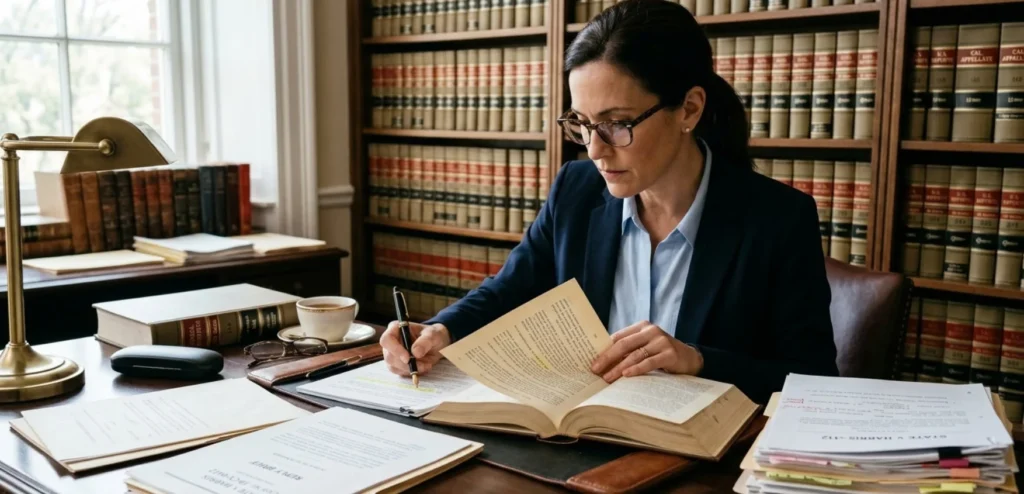
In American law, the expression often criticizes unsupported conclusions, especially expert opinions. Cornell’s Legal Information Institute describes it as an assertion resting solely on someone’s authority. Courts generally expect an expert to explain the basis connecting evidence with the opinion offered.
Federal expert-testimony rules reinforce that basic concern. Rule 702 requires sufficient facts or data and reliable principles and methods. The rule also requires reliable application of those methods to the case.
This issue can arise while courts decide whether jurors should hear particular expert evidence. Magazinezine’s motion in limine explainer provides related background on pretrial evidence decisions. That guide also explains several evidence questions that American judges may resolve before trial.
Legal vocabulary often sounds more complicated than the idea behind it. Magazinezine’s misfeasance guide follows the same plain-language approach to another legal term. Readers can also browse the site’s U.S. law explainers for more courtroom and legal concepts.
How to Respond to an Unsupported Assertion
You do not need advanced logic training to challenge weak reasoning. The goal is to identify what connects the evidence with a conclusion. Calm questions usually work better than immediately naming a fallacy.
- Ask for the evidence. Request facts, documents, research, or observations supporting the statement.
- Ask for the reasoning. Find out how the evidence leads to the stated conclusion.
- Check the speaker’s expertise. Confirm whether that expertise relates directly to the subject.
- Look for independent support. See whether other reliable sources reach similar conclusions.
- Separate confidence from proof. A confident delivery can still accompany weak reasoning.
- Stay open to a correct conclusion. Poor reasoning does not automatically make the conclusion false.
These steps help with schoolwork, workplace decisions, online claims, and everyday disagreements. They also reduce the temptation to attack the speaker personally. Instead, you evaluate the support for the claim.
Frequently Asked Questions
What does ipse dixit mean in simple English?
It means accepting a claim because someone said it, rather than because adequate proof was provided. The closest everyday idea is “because I said so.” The phrase usually carries a critical meaning when discussing arguments. Also worth reading: Irreconcilable Differences Meaning.
How do you pronounce the phrase?
Merriam-Webster gives an American pronunciation close to “IP-see DIK-sət.” Pronunciation can vary slightly between speakers and dictionaries. The stress normally falls strongly on the first and third syllables.
Is it the same as an appeal to authority?
The concepts overlap, but the terms can emphasize different weaknesses. Appeal to authority focuses on using a person’s status as support. A bare assertion can lack support even without referring to another authority.
Can a bare assertion still be true?
Yes, an unsupported statement can still be correct. The logical weakness concerns how the conclusion was supported. Evaluate the evidence separately from whether the speaker happened to reach the right answer.
Why does the phrase appear in American court cases?
Courts sometimes use it when an expert provides a conclusion without adequately explaining its basis. Credentials alone do not explain how facts support an opinion. Modern expert-evidence rules focus closely on reliable data, methods, and application.
The Bottom Line
This old Latin expression remains useful because unsupported certainty is still common. It reminds readers that confidence and authority are not substitutes for evidence. A stronger argument shows both the conclusion and the reasoning that supports it.
The next time a claim sounds final but unexplained, ask what supports it. That simple question can expose missing assumptions and weak evidence. It can also turn a stalled disagreement into a more useful discussion.