An albino cat is more than a white-coated feline with pale eyes. True albinism affects pigment production throughout the body. That difference matters because it affects identification, sun exposure risks, eye care, and daily management.
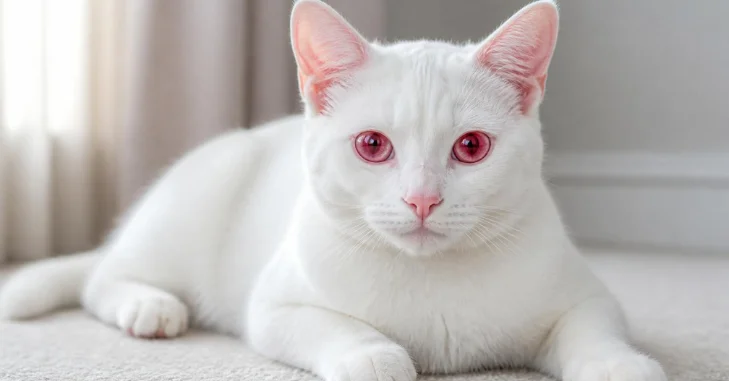
A truly albino feline has inherited genetic changes that greatly reduce or eliminate melanin production. This differs from an ordinary white cat, whose coat color can come from other genes. True albinism usually brings pale eyes, pink skin, light sensitivity, and a need for careful sun protection.
| Key point | What U.S. cat owners should know |
| Condition | Albinism is a pigment-production condition, not a cat breed. |
| Coat | True albinos appear white because melanin production is greatly reduced or absent. |
| Eyes | Eyes are typically very pale blue or may look pinkish in some lighting. |
| Skin | The nose, ear skin, eyelids, and paw pads often look pale pink. |
| Hearing | Classic pigment-linked deafness is associated more strongly with dominant-white genetics than albinism. |
| Main care issue | Limit intense sunlight and watch exposed skin and eyes for changes. |
| Confirmation | A veterinarian can assess the cat, while genetic testing may identify a known albino variant. |
Key Takeaways
- Not every white cat is albino, and most white cats have a different genetic explanation.
- True albinism affects pigment in the coat, skin, and eyes.
- Low pigment makes sun protection and eye monitoring especially important.
- Congenital deafness is better established in dominant-white cats than true albinos.
- Genetic testing can help confirm a known recessive albino variant in some cats.
What Makes Albinism Different From White Fur?
White fur alone does not prove albinism. White cats can carry genes that block or mask coat color while keeping other pigment pathways. Albino cats have a different genetic change that interferes directly with melanin production.
That distinction explains why eye and skin color matter during identification. A non-albino white cat may have green, gold, blue, or mixed-color eyes. True albinos usually have extremely pale eyes and consistently light pink skin.
Labels can be confusing with cats, as Magazinezine’s explainer on what a group of cats is called shows. Albino describes a genetic condition, not a shade of white.
- How to Identify an Albino Cat
Start with the eyes, nose, ears, lips, and paw pads. Look for consistently pale skin with little visible pigment anywhere. Pale blue or pinkish-looking eyes strengthen the case, but appearance alone cannot prove genetics.
A pure white coat can support the identification, yet it is not enough by itself. Cats with dominant-white or white-spotting genes can also appear completely white. A veterinarian can help separate albinism from other coat-color patterns.
Genetics: Why True Albinism Is Rare
Feline albinism is rare because the known albino variant is inherited in a recessive manner. UC Davis identifies a tested mutation as autosomal recessive. A cat needs two copies of that variant to express the tested form.
Researchers have also linked feline albinism to a mutation in the TYR gene. That gene helps control tyrosinase, an enzyme needed for melanin production. This genetic mechanism differs from the dominant-white KIT pathway found in many white cats.
Health Concerns Owners Should Understand
Low pigment leaves skin more vulnerable to sun damage. Thinly haired areas, especially ear tips and the nose, deserve close attention. Keeping the cat mainly indoors can reduce avoidable ultraviolet exposure.
Eye sensitivity is another practical concern because pigment normally helps control light inside the eye. Bright conditions may cause squinting, discomfort, or avoidance of strong light. Regular veterinary eye checks are sensible when vision concerns or persistent squinting appear.
Are Albinos More Likely to Be Deaf?
Deafness is often discussed with white cats, but the genetics are easy to confuse. Research links congenital deafness strongly with dominant-white genetics and blue eyes. True albinism is not considered the classic cause of this hearing problem.
Do not assume hearing status from coat color or eye color alone. A veterinarian can arrange objective hearing testing when there is a concern. Behavior at home can suggest a problem, but it cannot confirm one reliably.
Everyday Care for an Albino Cat
Build daily care around sun protection, predictable indoor spaces, and routine veterinary care. Provide shaded resting places away from harsh afternoon sunlight. Avoid applying human sunscreen unless your veterinarian specifically approves a feline-safe product.
Watch the ears, nose, eyelids, and other lightly covered areas during regular grooming. New redness, crusting, sores, or persistent irritation deserves prompt veterinary attention. Eye redness, cloudiness, pain, or repeated squinting also warrants an examination.
Food needs usually depend on age, body condition, activity, and medical history. Albinism alone does not require a special commercial diet. Feed a complete diet appropriate for the cat’s life stage unless your veterinarian recommends otherwise. More from us: Chimera Cat Facts.
A Simple Home Sun-Safety Plan
- Keep the cat indoors during the brightest parts of the day.
- Create shaded beds and hiding places in rooms with strong natural light.
- Check ear tips, nose skin, and eyelids during weekly grooming.
- Move favorite beds away from intense direct sunlight when irritation appears.
- Ask your veterinarian before using any topical sun-protection product.
This plan reduces exposure without making the home stressful or restrictive. Cats still need climbing areas, play, scratching surfaces, and comfortable window access. Use shade and room placement to balance enrichment with sensible protection.
Albinism Does Not Define Personality
Albinism is a pigment condition, not a temperament category. An albino kitten can be bold, quiet, social, cautious, playful, or independent. Personality depends more on genetics, early experience, health, handling, and the individual cat.
Light sensitivity can still shape daily behavior in subtle ways. A cat may choose dim rooms or avoid bright windows because those places feel more comfortable. Don’t mistake that preference for fearfulness or poor socialization.
When to Contact a Veterinarian
Schedule an examination when you notice persistent squinting, eye redness, cloudiness, or apparent vision changes. Skin changes also matter, especially sores or crusting on exposed pale areas. Sudden hearing concerns, balance problems, or unusual startle behavior also warrant evaluation.
If you are unsure whether a white cat is truly albino, start with a routine veterinary visit. Your veterinarian can assess skin, eyes, hearing concerns, and other possible explanations. Genetic testing may provide added confirmation when the known tested variant is relevant.
More Pet Reading on Magazinezine
Magazinezine already covers practical pet topics beyond feline genetics. Readers can explore the site’s Pets section for more animal-focused guides.
Dog owners can also read the Patterdale Terrier guide for care and temperament information. Language learners may enjoy Animals in French for pet and wildlife vocabulary. These pages give readers several related paths without repeating this guide’s focus.
Your Next Step
Start by confirming whether the cat is truly albino rather than simply white. Then build care around sunlight management, eye monitoring, and routine veterinary checks. Those steps address the main concerns without treating the cat as fragile.
Bring notes about eye reactions, skin changes, or hearing concerns to the appointment. Ask whether genetic testing would change care or mainly confirm the diagnosis. Then keep the home routine simple, comfortable, shaded, and enriched.
Frequently Asked Questions
How can you confirm an albino cat?
Appearance can suggest albinism, but it cannot confirm the underlying mutation. A veterinarian can assess the coat, skin, eyes, and possible health concerns. A feline genetic test may confirm a known albino variant when appropriate.
Can a cat be white without being albino?
Yes, and this is more common than true albinism. Dominant-white and white-spotting genetics can produce white fur without the albino mutation. Eye color and skin pigmentation can offer useful clues.
Do albino cats need special eye care?
They may need closer observation because low pigment can increase light sensitivity and visual problems. Provide comfortable shade and watch for squinting, redness, cloudiness, or pain. A veterinarian should examine persistent or sudden eye changes.
Are albino cats always deaf?
No, and albinism should not be treated as a deafness diagnosis. Congenital deafness is more strongly associated with dominant-white genetics in cats. Evaluate hearing concerns individually rather than assuming them based on appearance.
Can albino cats go outside?
Outdoor time increases exposure to strong sunlight and other routine feline hazards. Keeping these cats mainly indoors offers better control over ultraviolet exposure. Discuss safe outdoor options with your veterinarian if supervised access matters to your household.