The Tom Hardy Bane performance changed how audiences saw one of Batman’s most physically dangerous enemies. Hardy combined added size, unusual speech, controlled movement, and a restrictive mask for The Dark Knight Rises. Those choices created a villain who could threaten Batman physically while remaining calm and calculating.
Direct answer: Tom Hardy made Bane memorable through a deliberate mix of physical size, vocal experimentation, and restrained facial acting. His voice drew inspiration from bare-knuckle fighter Bartley Gorman. The mask then forced Hardy to communicate much of Bane’s personality through his eyes, posture, gestures, and speech.
| Key fact | Details |
|---|---|
| Actor | Tom Hardy |
| Character | Bane |
| Movie | The Dark Knight Rises |
| Director | Christopher Nolan |
| U.S. release | July 20, 2012 |
| Voice inspiration | Bare-knuckle fighter Bartley Gorman |
| Mask purpose | Helps Bane manage severe, constant pain |
| Physical approach | Added mass, strength work, controlled movement |
| Main opponent | Christian Bale’s Batman |
| Performance focus | Voice, eyes, posture, physical presence |
Why the Tom Hardy Bane Performance Still Works
Tom Hardy Bane needed to follow Heath Ledger’s Joker without feeling like another version of the same villain. Nolan instead wanted a threat who could challenge Batman through organized power and direct physical force. Hardy played him as disciplined, intelligent, and unusually composed rather than unpredictable.
That distinction gives the performance much of its strength. The Joker attacks Batman through chaos, while Bane approaches Gotham with planning and military control. His quiet confidence also makes sudden violence feel more threatening because it rarely seems impulsive.
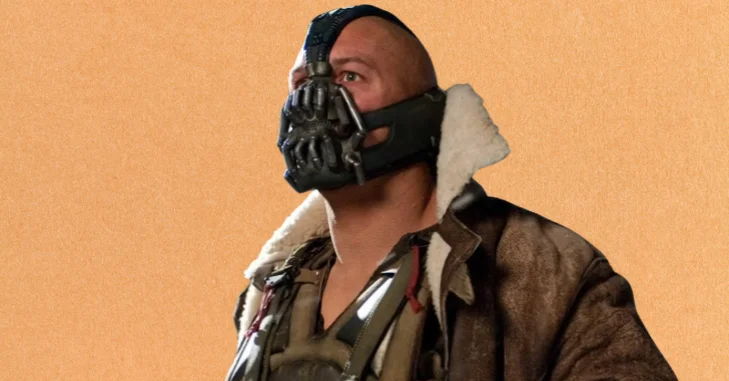
Hardy faced another challenge because the character spends most of the film behind a large mask. Viewers cannot read his mouth or most facial movements during major scenes. He therefore relied heavily on his eyes, brow, stance, hands, and distinctive speech.
How Tom Hardy Created Bane’s Voice
Bane’s voice became one of the film’s most recognizable creative choices. Hardy later explained that he drew inspiration from Bartley Gorman, a famous Romani bare-knuckle fighter. He presented the idea to Nolan despite knowing audiences might find the approach strange.
The finished voice is not a straightforward imitation of Gorman. Nolan has explained that Hardy transformed his inspiration into something different for the character. That helps explain why the accent remains difficult to classify through one regional label.
Hardy also wanted a contrast between Bane’s appearance and his manner of speaking. The character looks brutally powerful, yet his delivery can sound formal and carefully measured. That contradiction separates him from villains who rely mainly on shouting or aggressive speech.
The unusual delivery initially created a practical problem. Early audiences reportedly struggled to understand dialogue during previews before the film’s release. Sound work later helped the voice remain prominent while preserving its strange character.
Why Does Bane Wear the Mask?
Bane’s mask does not primarily hide his identity within Nolan’s story. It helps him cope with intense pain caused by injuries from his earlier life. That purpose makes the mask both medical equipment and an instantly recognizable visual feature.
Costume designer Lindy Hemming also wanted Bane to look different from Batman. She drew on animalistic shapes instead of giving him another conventional superhero-style face covering. The design helped create a grimacing appearance even while Hardy remained emotionally controlled.
The mask also changed Hardy’s acting options throughout production. He could not depend on subtle movements around his mouth to communicate emotion. Hardy instead made small changes around his eyes and brow carry much greater importance.
That restriction arguably strengthened the finished performance. Bane often feels difficult to read even when he speaks openly about his plans. The hidden face keeps a layer of emotional distance between the character and the audience.
How Hardy Changed His Body for Bane
Hardy already had experience changing his physique for demanding roles before playing the Batman villain. For Bane, the goal was not a sharply defined bodybuilding appearance. The character needed density, width, and enough size to look dangerous beside Christian Bale.
Hardy described his preparation as heavy strength work with circuits during the day. His diet also allowed more carbohydrates and fat than his preparation for Warrior. That approach supported the thicker appearance Nolan wanted for the character.
Contemporary reporting put Hardy around 187 pounds while preparing for the Bane role. Crew members also recalled how quickly his frame changed before filming. Camera work and costume choices then helped increase the character’s apparent scale onscreen.
Those production choices matter because Hardy is not unusually tall for an action star. Bane still appears massive because framing emphasizes his shoulders, neck, clothing, and posture. The result demonstrates how filmmaking can amplify an actor’s physical transformation without relying on size alone.
Readers interested in other distinctive screen careers can also explore Magazinezine’s Lori Petty career profile. Her work offers another example of performers building memorable characters through unusual choices. Magazinezine also covers film history through its John Larroquette movies guide and broader entertainment features.
Bane’s Physical Acting Matters as Much as His Size
Hardy does not play Bane like a constantly moving fighter looking for an opening. He often stands still, keeps his shoulders relaxed, and makes economical gestures. That calm physical language suggests someone who expects other people to move around him.
His fight scenes become more effective because they break that stillness. Bane can suddenly move with speed despite his heavy silhouette and layered costume. That combination makes him feel stronger than a character who displays aggression during every scene.
The performance also uses the hands in memorable ways. Bane sometimes holds his vest or positions his arms casually while speaking. Those relaxed gestures reinforce his confidence before violence begins.
For readers exploring how older visual styles continue shaping modern entertainment, Magazinezine’s 80s anime classics guide provides another useful cultural overview. It examines how distinctive production choices can remain influential decades later. That same longevity helps explain why Bane still inspires discussion long after 2012.
How Bane Differs From the Comic Character
Nolan’s version keeps several familiar parts of Bane while changing others for his grounded Batman universe. The film preserves the character’s intelligence, physical strength, prison background, and ability to defeat Batman. It removes much of the comic version’s more fantastical presentation.
That adjustment fits the trilogy’s broader approach to Batman mythology. Technology, physical training, social conflict, and organized crime replace many overtly supernatural explanations. Bane therefore functions more like a revolutionary military leader than a chemically enhanced comic-book wrestler.
His relationship with the League of Shadows also connects him directly with earlier events in Nolan’s trilogy. That link makes Bane part of Bruce Wayne’s unfinished history rather than an isolated new enemy. The final film can therefore revisit ideas established during Batman Begins.
Why Bane Was the Right Final Physical Test for Batman
Bruce Wayne begins The Dark Knight Rises physically diminished and emotionally withdrawn. Bane exposes those weaknesses instead of facing Batman at the hero’s strongest point. Their first major confrontation becomes a demonstration of how unprepared Bruce has become.
The famous defeat works because Bane controls both the physical and psychological rhythm of the encounter. Batman expects determination and equipment to compensate for his condition. Bane instead shows that preparation, patience, and strength can overwhelm those advantages.
That defeat gives Bruce a different challenge from his earlier battles. He cannot solve the problem through better technology alone. He must rebuild his body, motivation, and willingness to live before returning to Gotham.
Why the Performance Became a Pop-Culture Fixture
The voice supplied audiences with something instantly identifiable beyond Bane’s appearance. Fans could imitate the cadence without wearing the costume or reproducing the character’s physique. That made the performance unusually easy to parody, quote, and reference.
Parody did not necessarily weaken the character’s reputation. Instead, the imitation kept Hardy’s version visible across internet culture after the film left theaters. The mixture of menace and theatrical speech made Bane suitable for both serious discussion and comedy.
His visual design contributed to that endurance as well. The mask creates a recognizable silhouette without requiring a Batman logo or conventional superhero costume. Combined with the coat and broad frame, it makes the character identifiable almost immediately.
A Villain Built From More Than Muscle
Bane’s impact comes from much more than Hardy gaining weight for a superhero movie. The voice, mask, posture, costume, sound design, and physical training work toward the same character. Each element supports the image of an intelligent man who believes he already controls every confrontation.
That is why the performance remains compelling despite years of impressions and memes. Hardy turned several acting restrictions into defining traits instead of treating them as obstacles. Revisiting The Dark Knight Rises shows how carefully those choices support Nolan’s final Batman story.
For more film, television, and pop-culture coverage, explore Magazinezine’s growing Entertainment section. Its profiles and retrospectives connect notable performances with the cultural moments surrounding them. That wider context can help readers discover more memorable actors, characters, and screen stories.
Frequently Asked Questions
What inspired the Tom Hardy Bane voice?
Hardy said bare-knuckle fighter Bartley Gorman was a major starting point for the voice. He brought that inspiration to Christopher Nolan before filming. The final sound became Hardy’s own interpretation rather than a direct imitation.
Did Tom Hardy gain weight to play Bane?
Yes, Hardy added substantial size while preparing for the role. Contemporary reporting placed him around 187 pounds during that period. His training emphasized strength and a thicker physical appearance rather than extreme definition.
Why does Bane need his mask?
The film explains that Bane lives with severe pain following earlier injuries. His mask helps him manage that pain and continue functioning. It is therefore different from Batman’s mask, which primarily protects Bruce Wayne’s identity.
Was Bane’s voice changed after audience complaints?
Early previews produced complaints that Bane was difficult to understand. The finished film gave his dialogue greater clarity and presence within the mix. Sound editor Richard King described extensive work around the masked character’s vocal presentation.
Why is Hardy’s Bane still remembered?
The performance combines several choices that are difficult to separate from the character now. His voice, mask, movement, costume, and physical presence all reinforce one another. That unified approach made Bane distinct from both earlier Batman villains and later screen antagonists.