A chimera cat carries cells with more than one genetic origin, usually because early embryos fused during development. The result can be invisible, or it can appear as striking coat and eye differences. A split-colored face is a clue, not a diagnosis, because ordinary feline color genetics can create similar patterns.
Direct answer: A chimera cat has genetically distinct cell populations that originated from different zygotes. Early embryo fusion can place both cell lines in one animal. Coat splits or mismatched eyes may suggest chimerism, but confirmation requires DNA evidence from different tissues or body regions.
| Key question | What science supports |
|---|---|
| What is it? | One animal contains cell populations from different zygotes. |
| How can it happen? | Two early embryos can fuse and continue developing as one individual. |
| Does a split face prove it? | No. Mosaic coat genetics can create a similar appearance. |
| Can eye colors differ? | Yes, but heterochromia has other causes and is not proof. |
| How is it confirmed? | Genetic testing must identify distinct cell lines, often across multiple samples. |
| Is it a breed? | No. Chimerism is a developmental genetic condition, not a cat breed. |
| Is it always unhealthy? | No specific health pattern is established for every affected cat. |
Key Takeaways
- True chimerism is defined by genetics, not by a dramatic coat pattern.
- Calico and tortoiseshell coloring can result from X-chromosome inactivation without embryo fusion.
- A clean facial color split can occur without proving two genetic cell lines.
- DNA testing from different tissues can provide stronger evidence than appearance alone.
- The sources reviewed do not provide a reliable population percentage for feline chimerism.
- Routine veterinary care should focus on the individual cat, not an internet label.
What Does Chimerism Mean in Cats?
Chimerism means one animal contains cells that came from more than one zygote. Peer-reviewed feline cases have confirmed this phenomenon with molecular testing. One 2020 report identified a female feline chimera through DNA profiling and coat-color analysis.
This differs from ordinary variation arising within one fertilized egg. A chimeric animal can carry distinct DNA profiles in separate cell populations. Those populations may appear unevenly across blood, skin, hair roots, or reproductive tissues.
Chimera Cat Genetics: How Two Cell Lines Form
Two separately fertilized eggs can begin developing as two embryos. If they merge early enough, one animal may continue developing from both cell populations. Each population can retain genetic markers from its original zygote.
The distribution of those cells does not follow a visible half-and-half blueprint. One genetic line may dominate some tissues while the other appears elsewhere. That is why a dramatic face is not required, and an ordinary-looking animal could still be chimeric.
Why a Split Face Does Not Prove Chimerism
Female calico and tortoiseshell cats already provide an important alternative explanation. UC Davis notes that orange and black patches can result from random X-chromosome inactivation. That mechanism creates a cellular mosaic without requiring two embryos to fuse.
A neat line down the face can still emerge from normal coat-color development. Geneticists have used Venus, a well-known split-faced tortoiseshell, to explain this distinction. Her appearance attracted the chimera label, but experts cautioned that appearance alone could not confirm it.
| Feature | True chimerism | Somatic mosaicism | Typical female calico or tortoiseshell |
|---|---|---|---|
| Starting point | More than one zygote | One zygote | One zygote |
| Why cells differ | Embryonic cell lines combine | A genetic change creates a distinct cell line | Random X-inactivation changes color expression |
| Split face possible | Yes | Yes | Yes |
| Different eye colors possible | Yes | Yes | Yes |
| Appearance proves diagnosis | No | No | No |
| Strongest confirmation | DNA evidence from distinct cell populations | Genetic analysis | Coat genetics plus chromosome context |
What Physical Signs Can Appear?
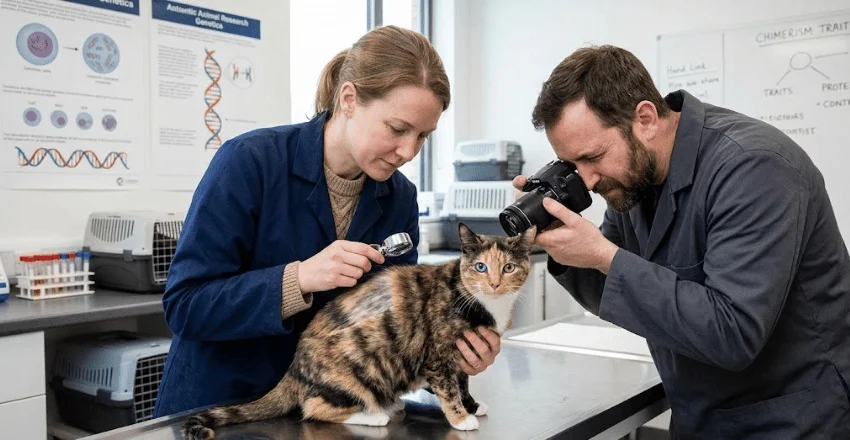
Some suspected chimeras have sharply divided coat colors or unusual patches. Others may show different eye colors, called heterochromia. Neither feature appears in every confirmed case, so a normal-looking coat cannot rule chimerism out.
Heterochromia deserves special caution because several mechanisms can affect feline eye color. White spotting and other pigment genes can change one eye without embryo fusion. A mismatched pair of eyes should be treated as a visual trait, not genetic proof.
How Genetic Testing Can Confirm Chimerism
Researchers confirm chimerism by finding genetic evidence for distinct cell populations. A 2020 female case used DNA profiling to rule out mosaicism and chromosome-number abnormalities. Another study identified true chimerism in a fertile male using blood, hair roots, and testicular tissue.
A single cheek swab may not capture every cell line in the body. The second genetic population could be concentrated in another tissue or region. For that reason, meaningful confirmation may require a veterinarian or genetics laboratory to plan multiple samples.
A careful testing discussion should cover several practical points. The goal is to learn whether results would matter for care. Ask these questions before samples are taken:
- Whether confirmation would change medical care.
- Which tissues can be sampled safely and ethically.
- Whether a veterinary genetics laboratory can interpret mixed results.
- Whether chromosome testing is useful alongside DNA profiling.
How Rare Is Feline Chimerism?
Confirmed cases are uncommon in the published veterinary literature. That does not provide a trustworthy percentage for all domestic cats. Many cats are never genetically tested, while visually unusual cats may receive the label without confirmation.
Male tortoiseshell cats often prompt genetic investigation because that coat pattern is unusual in typical XY males. Yet several explanations can exist, including chromosome abnormalities, mosaicism, and chimerism. Published veterinary reviews separate these mechanisms rather than treating every male tortoiseshell as the same condition.
Health, Lifespan, and Personality
Current feline evidence does not support one universal health profile for chimeric cats. Peer-reviewed reports include genetically confirmed animals, including a fertile male. Those cases show that chimerism does not automatically mean infertility or poor health.
Personality also cannot be predicted from having two genetic cell lines. Temperament still reflects genetics, development, socialization, environment, and individual experience. Owners should judge appetite, activity, comfort, behavior changes, and veterinary findings rather than coat symmetry.
Is It a Breed, and Can It Be Bred on Purpose?
Chimerism is not a recognized cat breed. It is a developmental event involving genetically distinct cell populations in one body. That makes it different from inherited breed traits described in Magazinezine’s Patterdale Terrier breed guide.
Breeders cannot reliably schedule the early embryo fusion that creates natural chimerism. Sellers should not use a split face as automatic proof of a special genetic status. A striking appearance may be genuine while the biological explanation remains untested.
Famous Split-Faced Cats and the Social Media Myth
Split-faced cats became internet celebrities because the visual effect is easy to understand instantly. Venus became a well-known example and was often described online as a chimera. Genetic experts noted that her tortoiseshell coloring could also arise through X-inactivation and unusual pattern placement.
Social media creates a simple trap: visible symmetry gets mistaken for genetic certainty. True chimerism is a laboratory finding, even when coat patterns provide a useful clue. The most accurate description for an untested cat is often “suspected” rather than confirmed.
What U.S. Owners Should Do if Their Cat Looks Chimeric
Start with your regular veterinarian if the cat has a new health concern. Coat pattern alone usually does not create an urgent medical problem. Bring clear photos, breeding history if known, and any previous genetic test results.
Ask whether further testing would change diagnosis, treatment, or breeding decisions. Testing for curiosity alone may not justify invasive sampling in a healthy animal. For broader reading, Magazinezine’s Pets section collects current animal-care and behavior coverage.
Prepare your questions before the veterinary appointment. Focus on testing value, safe sampling, and medical relevance. These prompts can keep the discussion practical:
- Could ordinary coat genetics explain this pattern?
- Would chromosome testing add useful information?
- Which tissue samples would be needed for a meaningful result?
- Would any finding change the cat’s care plan?
- Should a veterinary geneticist review the case?
Frequently Asked Questions
How can I tell if my cat is a chimera cat?
You can’t confirm it from appearance alone. Split coloring, unusual patches, or different eye colors can raise suspicion. Genetic testing must identify distinct cell populations before the label becomes biologically meaningful.
Are all two-faced cats chimeras?
No. A clean facial split can arise through mosaic coat-color development, especially in tortoiseshell or calico cats. Genetics, not facial symmetry, determines whether true chimerism is present.
Can chimeric cats be male or female?
Yes. Published veterinary reports include both female and male confirmed cases. Sex can affect how certain coat-color patterns attract attention, but chimerism itself is not limited to one sex.
Do chimeric cats need special care?
Not automatically. Care should follow the cat’s age, health, reproductive status, and veterinary findings. Seek veterinary advice for pain, appetite changes, skin problems, reproductive concerns, or other symptoms regardless of coat pattern.
Can You Buy a Confirmed Chimeric Cat From a Breeder?
A seller can advertise an unusual-looking kitten, but appearance does not confirm chimerism. Natural embryo fusion is not a predictable breed trait. Ask for laboratory evidence before accepting any claim that carries a higher price.
Your Next Step
Enjoy the coat pattern, but separate visual appeal from a genetic diagnosis. Ask a veterinarian about testing only when the result has practical value. Keep ordinary preventive care and daily observation at the center of your decisions.
Magazinezine has more pet science and behavior coverage for curious owners. Breed profiles can help separate inherited traits from unusual developmental events. Its guide to canine cobbing behavior also shows why context matters when interpreting unusual animal traits.