Henry Selick is an American filmmaker whose name is closely connected with modern stop-motion animation. He directed The Nightmare Before Christmas, James and the Giant Peach, Coraline, and Wendell & Wild. His movies combine handmade animation, dark fantasy, unusual characters, and stories that respect younger audiences.
Direct answer: Selick is a director, writer, producer, and animator best known for distinctive stop-motion films. He directed The Nightmare Before Christmas and earned an Academy Award nomination for Coraline. His work helped bring handcrafted animation to several generations of American moviegoers.
| Quick fact | Details |
|---|---|
| Full name | Charles Henry Selick Jr. |
| Born | November 30, 1952 |
| Birthplace | Glen Ridge, New Jersey |
| Age in October 2026 | 73 |
| Profession | Director, writer, producer, animator |
| Best-known films | The Nightmare Before Christmas, James and the Giant Peach, Coraline, Wendell & Wild |
| Education | California Institute of the Arts |
| Major recognition | Academy Award nomination for Coraline |
| Specialty | Stop-motion animation |
Key Takeaways
- Selick was born in New Jersey and developed an interest in animation during childhood.
- He studied animation at CalArts and graduated in 1977.
- He directed The Nightmare Before Christmas, although Tim Burton created its story and characters.
- Coraline earned him an Academy Award nomination for Best Animated Feature.
- His 2022 film Wendell & Wild marked his return to feature directing after more than a decade.
- His career helped keep stop-motion filmmaking visible during periods dominated by computer animation.
Who Is Henry Selick?
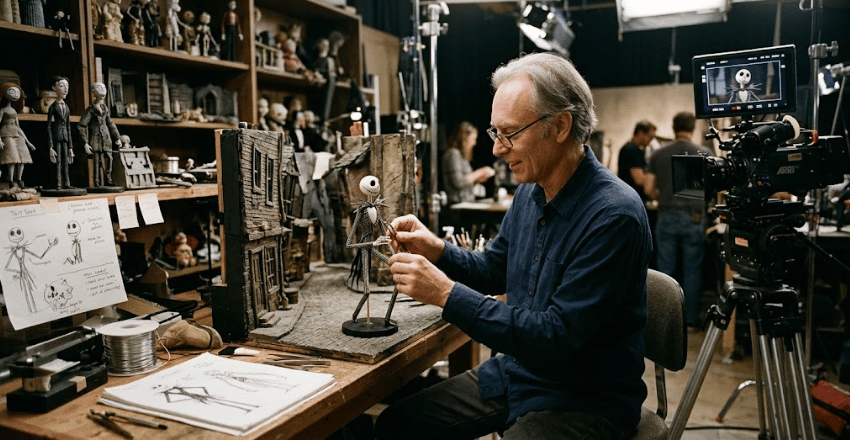
Charles Henry Selick Jr. was born on November 30, 1952, in Glen Ridge, New Jersey. He grew up in Rumson and became interested in drawing at a young age. Animation later let him combine visual art, storytelling, design, and movement.
He first studied science at Rutgers University before moving toward art and animation. His education eventually took him to the California Institute of the Arts. CalArts lists him among its film and video alumni as an MFA graduate from 1977.
That training put him in close contact with an important generation of American animators and filmmakers. He later worked at Disney early in his professional career. Those experiences helped establish the technical foundation behind his later stop-motion features.
From Disney Animator to Feature-Film Director
Selick entered the animation industry through traditional studio work rather than directing features immediately. He worked on Disney productions and later spent years creating commercials, short films, and other animation projects. That varied background gave him experience with timing, physical models, design, and compact visual storytelling.
His commercial work included projects associated with the Pillsbury Doughboy and MTV. He also directed and developed independent animated shorts before his major feature breakthrough. These projects allowed him to experiment without the scale and financial pressure of a studio feature.
Readers interested in earlier animation history can also explore Magazinezine’s feature on 1980s anime. It covers another period when distinctive visual techniques reshaped animated storytelling for American audiences. That broader history helps show how many animation traditions developed before digital production became dominant. Magazinezine’s guide to 80s anime
Directing The Nightmare Before Christmas
One of the most common misconceptions about The Nightmare Before Christmas concerns its director. Disney officially credits Selick as the 1993 movie’s director. Tim Burton created the story and characters and served as a producer.
The distinction matters because film direction involves turning concepts into finished performances, images, pacing, and scenes. Selick led the process that brought Burton’s designs into an extended stop-motion production. The result became one of the most recognizable animated films associated with either filmmaker.
Disney records the film’s original U.S. release date as October 13, 1993. The studio also lists Selick as a director. Burton remains central to its identity, but the finished film reflects a major creative collaboration.
James and the Giant Peach Expanded His Visual Style
Selick followed his feature debut with James and the Giant Peach in 1996. The movie adapted Roald Dahl’s novel and combined live-action material with stop-motion animation. That structure gave the director another chance to mix physical filmmaking methods with fantasy storytelling.
The film also continued his professional connection with Tim Burton, who served as a producer. Yet its visual world gave Selick room to develop ideas beyond Nightmare. The production strengthened his reputation as a filmmaker who could manage technically complex animation features.
His career during the 1990s also belongs to a wider period of distinctive American screen culture. Magazinezine’s feature on 1990s pop culture examines the celebrity and media environment surrounding that decade. It offers useful context for readers exploring the entertainment era when his early features appeared. Magazinezine’s 90s heartthrobs and pop-culture guide
Why Coraline Became a Career Landmark
Coraline arrived in 2009 and became another defining film in Selick’s career. He directed, wrote, produced, and worked as production designer on the stop-motion adaptation. The story came from Neil Gaiman’s novel and was produced through Laika.
The movie helped introduce detailed stop-motion filmmaking to younger audiences during a digital-animation boom. Its strange alternate world also suited Selick’s interest in unsettling fantasy with emotional stakes. The film remains one of the titles most closely associated with his name.
The Academy of Motion Picture Arts and Sciences nominated Coraline for Best Animated Feature at the 2010 ceremony. Selick received the nomination attached to the film. Pixar’s Up, directed by Pete Docter, ultimately won the category.
The nomination confirmed that handcrafted stop-motion could still compete beside major computer-animated productions. It also brought wider recognition to the director’s work outside The Nightmare Before Christmas. That distinction remains an important part of his professional record.
What Makes His Stop-Motion Style Different?
Stop-motion requires filmmakers to photograph physical puppets repeatedly while changing their positions between frames. That process gives objects a material presence that digital animation approaches differently. Selick has repeatedly returned to that handmade quality throughout his career.
His movies often feature characters who feel slightly awkward, strange, or visually imperfect. Those qualities make the worlds feel tactile rather than polished into uniformity. Darkness also appears frequently, but humor and sympathy usually balance the unsettling imagery.
His films rarely treat younger viewers as unable to handle fear or complicated emotions. Danger, grief, loneliness, and family conflict can exist beside jokes and fantasy. That combination helps explain why his movies often attract both children and adults.
American audiences interested in unconventional screen personalities may also enjoy Magazinezine’s profile of Lori Petty. Her career developed around many similarly unusual and cult-oriented projects. Both stories show how distinctive creative identities can retain audiences across decades. Magazinezine’s Lori Petty career profile
Wendell & Wild Marked His Feature Return
Selick returned to feature directing with Wendell & Wild, released by Netflix in 2022. He directed, co-wrote, and produced the stop-motion fantasy. Jordan Peele co-wrote and produced the project while voicing one of its title characters.
Keegan-Michael Key voiced the other demon brother, while Lyric Ross played teenager Kat Elliot. The story developed from an older idea inspired partly by Selick’s sons. Netflix released the movie in the United States on October 28, 2022.
The project arrived more than a decade after his previous feature, Coraline. Its production again depended on handmade stop-motion methods and elaborate puppet work. Netflix described the movie as an animated fantasy built through the artistry of stop motion.
Henry Selick Movies in Order
The director’s feature filmography is compact compared with many longtime Hollywood filmmakers. Each project required extensive animation work and lengthy production schedules. That makes the small number of films less surprising than it first appears.
| Year | Film | Main role |
|---|---|---|
| 1993 | The Nightmare Before Christmas | Director |
| 1996 | James and the Giant Peach | Director, co-producer |
| 2001 | Monkeybone | Director, executive producer |
| 2009 | Coraline | Director, writer, producer |
| 2022 | Wendell & Wild | Director, writer, producer |
His credits also extend beyond those five theatrical features. Earlier work includes short films, storyboarding, animation, commercials, and other production roles. These projects help explain the technical range visible throughout his directing career.
Why His Career Still Matters
Selick’s importance comes partly from his commitment to a slow and physically demanding filmmaking method. Stop-motion survived alongside major shifts toward computer animation and digital effects. His best-known films showed that audiences could still connect strongly with physical puppets and miniature environments.
He also helped establish darker family fantasy as a durable part of modern animation. His stories often give children meaningful choices instead of placing them beside adult heroes. Fear becomes part of growing up rather than something removed from childhood stories.
His movies also demonstrate how authorship in filmmaking can involve several major creative voices. Nightmare is the clearest example because Burton created its foundational story and visual concepts. Selick’s direction remains equally important when discussing how those ideas became a finished feature.
Frequently Asked Questions
Who is Henry Selick?
He is an American director, animator, writer, and producer known for stop-motion filmmaking. His major directing credits include Coraline and The Nightmare Before Christmas. He has worked in animation since the 1970s.
How old is he in 2026?
He is 73 years old as of October 2026. He was born on November 30, 1952, in Glen Ridge, New Jersey. He will turn 74 on November 30, 2026.
Did Tim Burton direct The Nightmare Before Christmas?
No, Disney credits Selick as the film’s director. Burton created the story and characters and served as a producer. This distinction is confirmed by Disney’s official movie credits.
Did he direct Coraline?
Yes, he directed the 2009 stop-motion adaptation of Neil Gaiman’s novel. He also wrote, produced, and worked on its production design. The film earned him an Academy Award nomination for Best Animated Feature.
What was his most recent feature film?
His latest released feature is Wendell & Wild, which arrived in 2022. Netflix released the movie after a limited theatrical run in the United States. The project reunited his stop-motion style with a story co-written by Jordan Peele.
Why is he important to stop-motion animation?
His films kept large-scale stop-motion features visible across several decades. They also showed that handmade animation could support sophisticated fantasy stories for mixed-age audiences. Coraline receiving an Oscar nomination reinforced that artistic credibility.
A Career Built Frame by Frame
Selick has spent decades turning physical puppets, miniature sets, and strange stories into memorable cinema. His filmography is small because stop-motion features require extraordinary amounts of careful production. Yet several of those films became enduring reference points for the entire medium.
For U.S. viewers, his work connects multiple eras of modern animation. Nightmare introduced his feature direction, while Coraline brought a new generation to handcrafted dark fantasy. Wendell & Wild showed that his approach still had a place in contemporary streaming entertainment.
The best next step is to revisit his features in release order. Watching them chronologically makes changes in technique, storytelling, and production scale easier to recognize. It also makes his influence on modern stop-motion much clearer.