A car vibrating while driving usually points to a problem involving tires, wheels, brakes, suspension, or the drivetrain. The timing of the vibration often provides the strongest clue. A shake that appears only at highway speeds suggests different problems than shaking during braking.
Some causes are inexpensive to correct, such as tire balancing or proper inflation. Others may involve worn suspension parts, damaged tires, wheel bearings, or drivetrain components. Persistent or severe vibration deserves attention because certain failures can affect vehicle control.
Quick answer: Vehicle vibration often comes from an unbalanced tire, damaged wheel, uneven tire wear, brake problem, or worn suspension component. Shaking at highway speeds commonly suggests a tire or wheel issue. Vibration during braking can indicate brake trouble, while shaking under acceleration may involve axles, mounts, or drivetrain parts.
Quick Guide to Common Vibration Symptoms
| When You Feel the Vibration | Possible Causes | Where You May Feel It | Recommended Action |
|---|---|---|---|
| Around highway speeds | Wheel imbalance, tire damage, bent wheel | Steering wheel or seat | Inspect tires and balance wheels |
| During braking | Rotor or brake system issue | Brake pedal or steering wheel | Have brakes inspected |
| During acceleration | CV axle, engine mount, drivetrain issue | Floor, seat, or entire vehicle | Schedule a mechanical inspection |
| At most road speeds | Damaged tire, bent wheel, loose component | Entire vehicle | Inspect promptly |
| After hitting a pothole | Bent wheel, alignment, suspension damage | Steering wheel or body | Check wheels and suspension |
| Only after sitting | Temporary tire flat spotting | Steering wheel or seat | Monitor as tires warm |
| With pulling or uneven wear | Alignment or suspension issue | Steering wheel | Check alignment and tires |
Why Is My Car Vibrating While Driving?
A car vibrating while driving can originate from any rotating or moving component. Tires and wheels are common starting points because they rotate continuously. Their condition also changes the vibration as vehicle speed increases.
Cars.com notes that wheel-and-tire assemblies are a common source of driving vibration. The location and timing of the shaking help narrow the diagnosis. A driver should note speed, braking, acceleration, noises, and where the vibration feels strongest.
Michelin also recommends checking tires when a vehicle begins vibrating or handling differently. Tire imbalance can create steering wheel or floor vibration at particular speeds. Persistent vibration should be professionally inspected rather than ignored.
1. Unbalanced Tires or Wheels
Wheel imbalance is among the most common causes of speed-related shaking. Small weight differences become more noticeable as the wheel spins faster. The result may feel like a repeating vibration through the steering wheel.
The shaking often becomes obvious within a certain highway-speed range. It may weaken again when your speed changes. Professional wheel balancing corrects the uneven weight distribution around the assembly.
Michelin explains that imbalance can contribute to irregular tire wear and extra suspension stress. Correct balancing helps the tire maintain steadier road contact. This makes tire balancing a sensible early check for highway-speed vibration.
2. Tire Damage or Uneven Tire Wear
A damaged tire can create vibration even when the wheel is balanced correctly. Bulges, tread separation, flat spots, and unusual wear patterns can disturb rotation. Some damage may be difficult to notice during a quick visual inspection.
Check each tire for cuts, bulges, exposed material, or uneven tread. Also compare tire pressures with the vehicle manufacturer’s recommended values. Incorrect pressure can change handling and may worsen existing tire problems.
Bridgestone warns that vibration can sometimes appear before a tire failure. Drivers should not continue at high speed when a tire looks damaged. A qualified tire professional should inspect suspicious damage before you drive further.
3. Bent Wheels After a Pothole or Curb Impact
Potholes and curb strikes can bend a wheel enough to cause noticeable shaking. The damage may affect either the inner or outer part. A minor bend may become more noticeable at higher speeds.
A technician can rotate the wheel while inspecting its movement. This reveals side-to-side or vertical movement that might otherwise be hidden. The tire should also receive inspection because the same impact can damage it.
Hard impacts can also affect alignment and suspension parts. If steering changed after the impact, request a broader inspection. Delaying that check may allow uneven tire wear to develop.
4. Wheel Alignment Problems
Alignment controls the direction and angle at which the wheels meet the road. Poor alignment more commonly causes pulling and uneven tire wear than vibration alone. Yet alignment problems can accompany other damage that produces shaking.
Common clues include a steering wheel that sits off-center on a straight road. The vehicle may also pull left or right. One tire edge may wear faster than the opposite edge.
Balancing and alignment are different services. Balancing addresses how the wheel assembly rotates. Alignment adjusts how the wheels point and contact the road.
Readers interested in preventive vehicle care can also see Magazinezine’s quiet car maintenance fixes. Small maintenance problems often become more expensive after extended neglect. Regular inspections can catch wear before it affects handling.
5. Brake Problems That Cause Shaking
Vibration that appears mainly while braking deserves a brake inspection. Rotor surface variation can produce pulsing through the pedal or steering wheel. Worn or loose front-end components may create similar symptoms.
Firestone identifies brake rotors, pads, guide pins, and steering components as possible sources. The exact cause requires inspection, not guesswork based on vibration alone. Brake problems can affect stopping performance, so delaying diagnosis is unwise.
Notice whether the shaking becomes stronger during harder braking. Also listen for grinding, scraping, or other new sounds. Those details can help a technician identify the affected system faster.
6. Worn Steering or Suspension Components
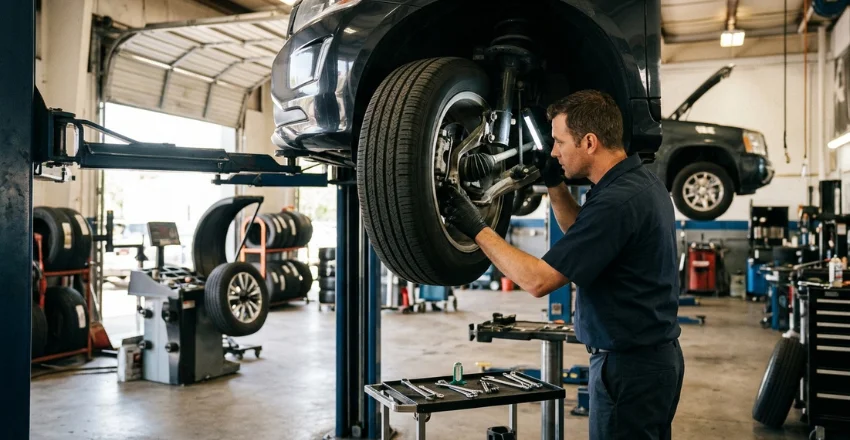
Your suspension keeps the tires controlled as the vehicle moves over changing road surfaces. Worn ball joints, bushings, tie rods, or related components can introduce looseness. That movement may cause vibration, wandering, or unstable steering.
Suspension problems sometimes become more obvious after hitting bumps. You may also hear clunks or notice unusual tire wear. Any looseness affecting steering should receive prompt professional attention.
A tire shop may discover suspension wear during a balancing or alignment inspection. Correct the worn part before performing the final alignment. Otherwise, the alignment may not remain accurate.
Car Vibrating While Driving at Highway Speeds
Shaking around 50 to 70 mph often points to tires and wheels first. An imbalance can become strongest within a particular speed range. A bent wheel or damaged tire may create similar behavior.
Pay attention to whether the steering wheel shakes more than the seat. Steering wheel vibration can suggest that the problem is nearer the front wheels. Vibration through the seat may point toward rear wheels or another rotating component.
Do not assume every highway-speed shake requires alignment. Wheel balancing, tire condition, and wheel damage should also be checked. A technician can test each possibility instead of replacing parts unnecessarily.
7. Wheel Bearing Problems
Wheel bearings let the wheels rotate with limited friction while supporting vehicle loads. Wear can cause vibration, humming, growling, or looseness. Symptoms may change as the vehicle turns or changes speed.
A failing bearing requires careful diagnosis because similar noises can come from tires. A technician can check bearing play and listen while rotating the wheel. Replacement becomes necessary when excessive wear or looseness is confirmed.
Driving extensively with a severely worn bearing can create additional mechanical risk. Schedule an inspection when vibration appears with humming or grinding. Do not rely on noise alone to identify the component.
8. CV Axles or Driveshaft Problems
Drivetrain components can cause shaking that worsens during acceleration. Front-wheel-drive vehicles commonly use CV axles to transfer power to the wheels. Rear-wheel-drive and some all-wheel-drive vehicles use longer driveshaft assemblies.
A damaged or worn axle can create vibration as torque increases. Driveshaft imbalance or worn supporting components can produce similar symptoms. These problems usually need inspection underneath the vehicle.
Notice whether the vibration becomes stronger when accelerating uphill. Also check whether it fades after releasing the accelerator. That pattern can help separate drivetrain-related shaking from simple wheel imbalance.
Magazinezine covers newer drivetrain technologies in its overview of 2026 automotive trends. Vehicle designs differ greatly between gasoline, hybrid, and electric platforms. Those differences can change which drivetrain parts require inspection.
9. Engine Problems or Worn Engine Mounts
Not every vibration begins at the wheels. An engine that runs unevenly can transmit shaking through the body. Worn engine or transmission mounts can increase how strongly you feel that movement.
Engine-related vibration may also occur while the vehicle is stopped. That clue separates it from problems that appear only when wheels rotate. Warning lights or a rough idle make an engine diagnosis more important.
If shaking happens during acceleration and while parked, tell your mechanic about both symptoms. That information may shorten diagnostic time. Avoid replacing tires based solely on vibration without considering these clues.
How to Narrow Down the Cause Before Visiting a Shop
You do not need to diagnose every mechanical part yourself. Instead, record exactly when and where the vibration happens. Those observations give a technician useful starting information.
Check these details before your appointment:
- The speed where vibration begins.
- Whether shaking increases as speed rises.
- Whether you feel it through the steering wheel.
- Whether the seat or floor vibrates more strongly.
- Whether braking triggers the problem.
- Whether acceleration makes the shaking worse.
- Whether the vehicle pulls to one side.
- Whether any unusual noises occur.
- Whether you recently hit a pothole or curb.
- Whether tires or wheels were recently serviced.
Recent tire work also matters because a wheel weight can sometimes be lost. A loose wheel fastener requires immediate attention. Mention any recent maintenance when describing the problem.
Is It Safe to Drive a Car That Is Vibrating?
Mild vibration doesn’t always mean immediate mechanical failure. Still, persistent shaking should not be treated as normal. Tire damage, loose components, or serious suspension problems can affect vehicle safety.
Reduce speed if the shaking begins suddenly or becomes severe. Pull over safely if you notice a tire bulge, major steering change, or loud mechanical noise. Do not continue driving on the highway if the vehicle feels difficult to control.
Michelin advises drivers to slow down and stop safely when unexpected vibration appears. Tires should then be inspected for visible damage. Persistent vibration without an obvious cause warrants a professional inspection.
What Should You Check First?
Start with the easiest visible items before assuming an expensive repair. Inspect tire pressure, tread condition, tire damage, and obvious wheel damage. Next, consider wheel balancing if shaking occurs mainly at highway speeds.
Braking-only vibration should move the brake system higher on your list. Shaking under acceleration makes drivetrain components more relevant. Vibration at idle can point toward an engine or mount problem.
For broader ownership advice, Magazinezine also covers vehicles such as the 2021 Hyundai Elantra. Model-specific maintenance requirements can vary considerably. Always follow your owner’s manual for pressure specifications and service intervals.
When Should You See a Mechanic?
Schedule an inspection if the vibration persists, worsens, or affects steering. Also seek help after a hard pothole impact. A sudden change after wheel or brake work also deserves investigation.
More urgent warning signs include severe shaking, visible tire damage, grinding noises, or loose steering. Do not drive a vehicle that becomes difficult to control. Use roadside assistance when continuing to drive could create unnecessary risk.
An accurate diagnosis may save money because several problems can cause similar symptoms. Replacing parts based only on a guess can become expensive. A proper inspection identifies the actual cause before repairs begin.
Frequently Asked Questions
Why is my car shaking at 60 mph?
Shaking near 60 mph often suggests a tire or wheel problem. Wheel imbalance becomes easier to feel at certain road speeds. Tire damage, bent wheels, or worn suspension parts can produce similar symptoms.
Can bad alignment cause vibration?
Poor alignment can contribute to handling problems and uneven tire wear. Vibration alone more often points toward wheel balance or another mechanical issue. Alignment should still be checked when the car pulls or wears tires unevenly.
Why does my steering wheel shake while driving?
Steering wheel shaking often points toward a problem near the front wheels. Possible causes include tire imbalance, wheel damage, suspension wear, or braking problems. The condition that triggers the shaking helps narrow the diagnosis.
Why does my car shake only when braking?
Brake-related shaking can come from rotor variation or other brake system problems. Steering and suspension wear may also become noticeable during braking. Have a mechanic inspect the brakes and front-end components rather than assuming one part failed.
Is a car vibrating while driving dangerous?
A car vibrating while driving can be harmless in some temporary situations, but persistent shaking needs attention. Ignored tire or steering problems can become safety concerns. Slow down and arrange an inspection when the vibration is new or worsening.
The Bottom Line
Vehicle vibration is a symptom, not a diagnosis. The speed and driving condition where it appears provide useful clues. Tires and wheels are sensible first checks when the shaking happens mainly at highway speeds.
Braking, acceleration, and idle-related vibration point toward other systems. Record what you feel before visiting a technician. That simple information can make the inspection faster and more focused.
Do not ignore severe or worsening shaking. Inspect visible tire problems immediately and reduce speed when necessary. A qualified technician can confirm the cause and recommend the correct repair.